The complete guide
Recording your own voice: how it can help with naps away from you
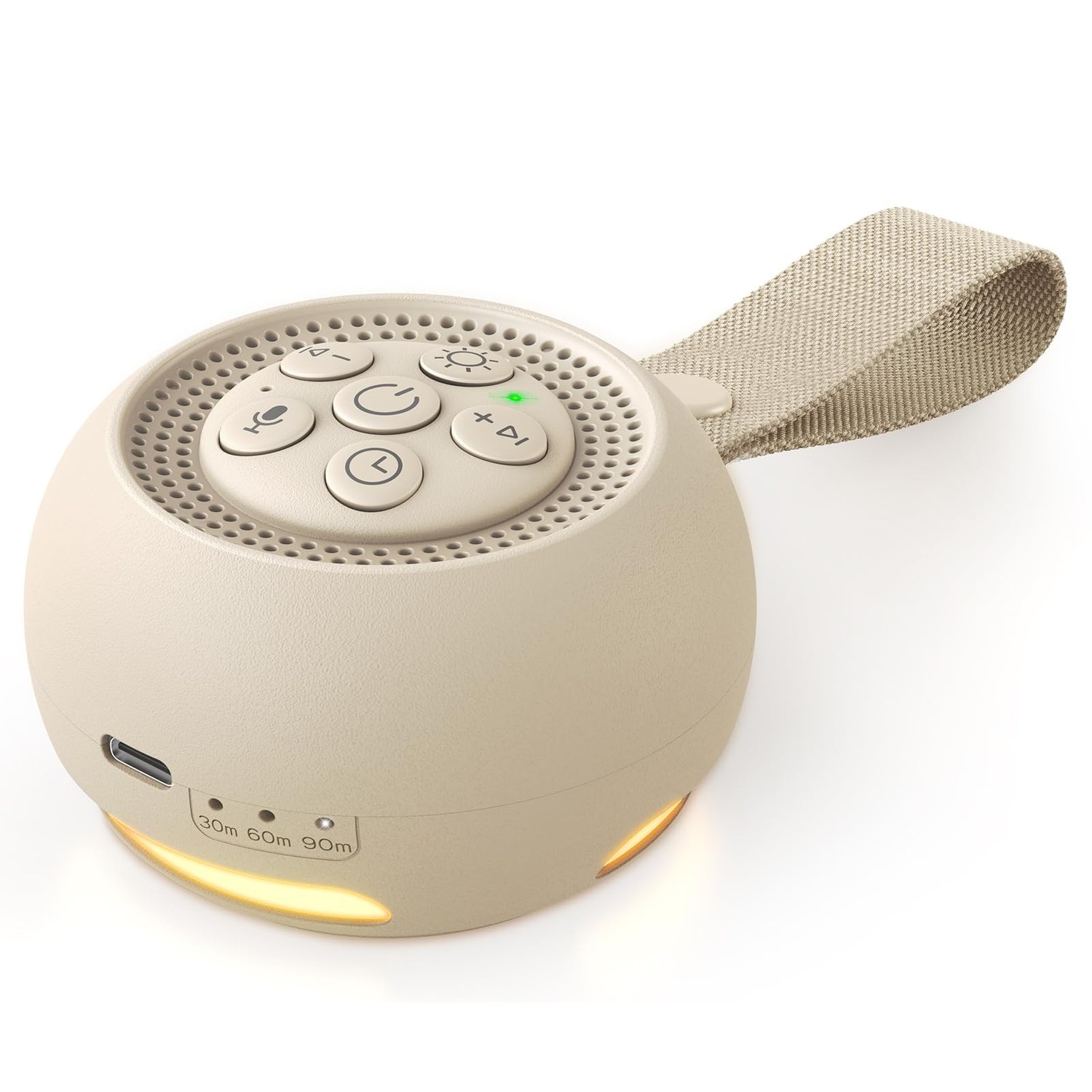
Separation is one of the harder parts of early parenting to plan around, and a small feature like voice recording exists specifically to make naps away from you a little easier, for you and for your baby.
Why a recording works differently to a lullaby
Built-in lullabies are chosen for being broadly soothing, but they're generic by design, the same track plays for every baby who owns the machine. A recording of your own voice is the opposite: specific, familiar, and tied to the one person your baby already associates with comfort. It won't replace you being there, but it can bridge a gap that a stranger's recorded lullaby simply can't.
What to actually record
Keep it simple and close to what you'd naturally do in person: a steady "shhh" sound, a few lines of a song you already sing at bedtime, or just a calm, low voice talking gently. Three minutes is enough for it to loop naturally without feeling repetitive, and matching what you'd normally do live means it reads as familiar rather than novel.
Where this genuinely helps
The clearest use cases are naps at daycare, an afternoon or overnight stay with grandparents, or a return to work where someone else is handling nap time. It can also help during the newborn stage if you need a moment to shower or eat while your baby settles in another room, standing in briefly for your presence rather than replacing your bedtime routine altogether.
It's a tool, not a fix for everything
A recording works best as one part of an existing routine, not a substitute for one. If your baby doesn't yet have a consistent sleep association, introducing a recorded voice on top of an already inconsistent routine is unlikely to solve much on its own. It tends to help most once a baby is already used to falling asleep with some kind of sound, this simply lets that sound be something more personal when you can't be there yourself.